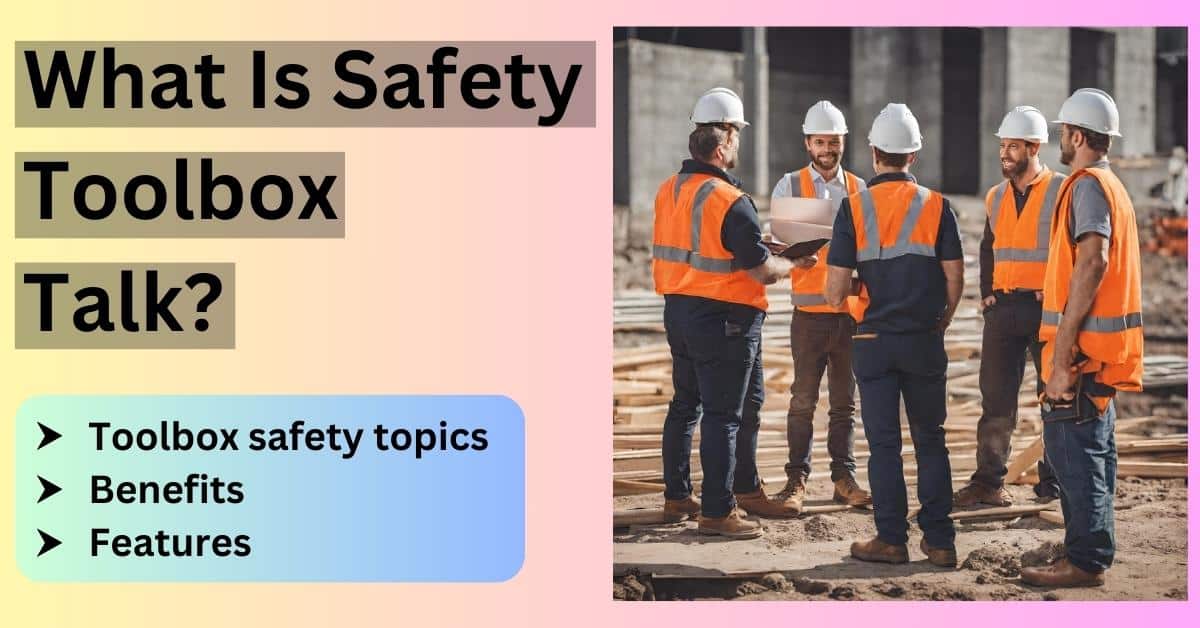
Workplace safety doesn’t start with policies buried in binders—it starts with conversation. Tool box talks are brief, focused safety meetings that cut through noise and deliver critical messages where it matters most: on the ground. Yet too many teams treat them as a compliance checkbox, recycling the same stale topics or skipping them entirely when schedules tighten. That’s a missed opportunity—and a risk.
The most effective tool box talks don’t just inform; they engage. They address real hazards, spark discussion, and reinforce a culture where safety is everyone’s responsibility. This guide breaks down high-impact tool box talk topics proven to drive awareness, reduce incidents, and build stronger safety habits across industries.
Why Tool Box Talks Matter (and Why
Most Fail)
Tool box talks are short—typically 10 to 15 minutes—designed to highlight specific safety concerns before work begins. Their power lies in timeliness and relevance. Yet many fall flat due to poor delivery, repetition, or disconnection from actual job conditions.
Common failures include: - Generic content: Talking about “slips and falls” without linking it to current site conditions. - One-way communication: Monologues instead of interactive discussions. - Inconsistent scheduling: Only held when inspectors are due.
The best talks link directly to the day’s tasks. If crews are setting up scaffolding, the talk should cover fall protection, guardrail installation, and load limits—not electrical safety from last week.
Pro Tip: Rotate facilitators. Let experienced workers lead talks on tasks they know well. It boosts ownership and keeps content authentic.
1. Fall Protection: Staying Grounded from Great Heights
Falls are the leading cause of death in construction. A tool box talk on fall protection must go beyond “wear your harness.” It should address how and when protection is used, equipment inspection, and rescue planning.
Key discussion points: - Proper use of harnesses, lanyards, and anchor points - Identifying fall zones before work begins - Ladder safety: 3-point contact, extension height limits - Scaffolding stability and plank integrity
Real-World Example: A crew starts installing roof trusses. The talk focuses on connecting before stepping onto the structure—even if it’s just two trusses up. Workers verify anchor points and practice verbal check-ins: “I’m tied off” before moving.
Common Mistake: Assuming temporary work doesn’t require full protection. Short-duration tasks still carry high risk.
2. Hand and Power Tool Safety
Tools are extensions of a worker’s body—when used correctly. When misused, they become hazards. This topic covers inspection, handling, and guarding.
Checklist for daily tool use: - Inspect cords for fraying (electrical tools) - Confirm guards are in place (e.g., on grinders or saws) - Use correct PPE: safety glasses, hearing protection, gloves - Store tools properly after use
Case Scenario: A worker uses an angle grinder without a side handle or guard. During the talk, the supervisor demonstrates correct setup and asks, “What could go wrong in 10 seconds?” prompting discussion on kickback and flying debris.
Critical Reminder: Damaged tools should be tagged and removed—no exceptions.
3. Hazard Communication and Chemical Safety
Many workers interact with chemicals daily—cleaners, solvents, adhesives—without fully understanding the risks. A strong tool box talk demystifies Safety Data Sheets (SDS) and proper handling.
Core Topics: - Reading chemical labels: pictograms, signal words, hazard statements - Proper storage: flammables away from heat, acids separate from bases - Spill response steps and PPE requirements
Interactive Exercise: Show a real SDS sheet. Ask workers to locate first aid measures or fire extinguishing recommendations.
Pitfall to Avoid: Using vague terms like “be careful.” Instead, say: “Wear nitrile gloves when handling acetone—latex won’t protect you.”
4. Electrical Safety Around Equipment and Cords
Electrical hazards aren’t just for electricians. Anyone using power tools, extension cords, or temporary lighting needs awareness.
Focus Areas: - GFCI use in wet or damp locations - Avoiding daisy-chaining power strips - Inspecting cords before use: no exposed wires or cracked plugs - Lockout/tagout (LOTO) basics—even for minor maintenance
On-Site Drill: Lay out a tangled cord mess. Ask, “What’s wrong here?” Workers identify trip hazards, pinched wires, and improper grounding.
Key Insight: Electricity takes the shortest path to ground—often through a person if conditions are right. Prevention is non-negotiable.
5. Personal Protective Equipment (PPE): Right Gear, Right Time
PPE is the last line of defense—but only if it’s used correctly. Too often, workers wear gear out of habit, not understanding why.
Discussion Prompts: - What PPE is required for today’s task? - Is your hard hat rated for electrical work? - Are safety glasses ANSI-compliant?
Real-World Gap: A worker wears steel-toe boots but no eye protection for grinding. Talk reinforces that PPE is task-specific.
Pro Tip: Conduct a “PPE audit” during the meeting: everyone stands and checks their gear. Peer accountability increases compliance.
6. Lifting and Manual Handling
Back injuries are costly and common. Tool box talks on safe lifting reduce strain and promote proper technique.
Essential Points: - Bend knees, keep back straight - Use mechanical aids when available - Team lifts for heavy or awkward loads - Clear walk paths to avoid tripping while carrying
Demonstration: Have a worker lift a heavy box incorrectly. Pause and ask, “What should change?” Then show the right way.
Hidden Risk: Repetitive lifting—even light loads—can cause cumulative injury. Discuss job rotation or micro-breaks.
7. Emergency Preparedness and Response
When something goes wrong, seconds count. Workers should know how to respond—whether it’s a fire, injury, or chemical spill.
Must-Cover Elements: - Location of first aid kits, AEDs, fire extinguishers - Emergency alarm sounds and evacuation routes - Reporting procedures: who to notify, how to describe the issue
Practice Drill: Run a 60-second scenario: “There’s smoke near the generator. What do you do?” Workers outline steps: alert others, pull alarm, grab extinguisher if safe.
Reality Check: Panic spreads fast. Practice builds confidence.
8. Hot Work and Fire Prevention
Welding, cutting, brazing—these tasks generate sparks that can ignite nearby materials in seconds.
Critical Controls: - Fire watch during and 30 minutes after work - Clearing combustibles within 35 feet - Having extinguishers and water sources ready - Permit requirements

Near-Miss Example: A spark ignites insulation in a wall cavity. The talk reviews how a fire watch could have caught it early.
Rule of Thumb: If you can smell smoke, it’s already too late.
9. Mental Health and Situational Awareness
Safety isn’t just physical. Stress, fatigue, and distraction contribute to accidents.
Talking Points: - Recognizing signs of fatigue: slow reaction, missed signals - Speaking up if you or a coworker seem “off” - Staying present during high-risk tasks
Human Factor: A worker rushing to finish before rain hits drops a tool from height. Talk emphasizes that pressure—internal or external—should never override safety.
Culture Tip: Normalize check-ins: “You good today?” builds trust and prevents incidents.
10. Site-Specific and Seasonal Hazards
Every job site has unique risks. Tool box talks should reflect them.
Examples: - Winter: Icy surfaces, hypothermia, equipment warm-up - Summer: Heat stress, hydration, sun protection - Confined Spaces: Air testing, entry permits, rescue planning - Night Work: Lighting, visibility, communication challenges
Best Practice: Use photos from your site. Show a wet stairway or blocked exit and ask, “How do we fix this?”
Top 5 Tools for Managing Tool Box Talks
Even the best topics fail without organization. These platforms help teams plan, deliver, and track talks effectively.
| Tool | Key Features | Best For |
|---|---|---|
| SafetyCulture (iAuditor) | Pre-built templates, photo evidence, real-time reporting | Teams needing digital audits and tracking |
| SiteDocs | Custom forms, offline access, integration with ERP | Large construction firms with complex workflows |
| Flinn Safety | Free topics, printable PDFs, OSHA-aligned | Budget-conscious teams needing ready-made content |
| Procore | Built into project management, talk scheduling, sign-offs | Companies already using Procore for operations |
| SafetyMate | Mobile app, multilingual support, checklists | Multilingual crews and remote sites |
Workflow Tip: Assign a weekly topic calendar. Rotate responsibility so supervisors and lead workers co-own safety communication.
Tool box talks aren’t about ticking a box—they’re about building awareness, one conversation at a time. The most impactful sessions are timely, interactive, and rooted in real work. Choose topics that match your crew’s tasks, encourage open dialogue, and reinforce that safety is a shared mission.
Start tomorrow: pick one high-risk task, gather the team, and talk through the hazards. Not in a lecture—like a real conversation. That’s how habits change.
FAQ
What is the ideal length for a tool box talk? Keep it between 10 and 15 minutes. Focus on one clear topic to maintain attention and retention.
Who should lead tool box talks? Supervisors typically lead, but experienced crew members should rotate in. Peer-led talks often feel more authentic.
How often should tool box talks be held? At minimum, weekly. High-risk tasks or new crews may require daily talks.
Can tool box talks be conducted digitally? Yes, especially with remote or spread-out teams. Use apps like SafetyCulture for attendance and documentation.
Should workers sign off on talks? Yes. Signatures confirm attendance and understanding. Digital tools automate this with timestamps and geolocation.
What makes a tool box talk effective? Relevance, interaction, and follow-up. Link the topic to current work, encourage questions, and observe behavior changes.
Are tool box talks required by OSHA? Not explicitly, but OSHA requires hazard communication and training. Tool box talks are a recognized method to meet those obligations.
FAQ
What should you look for in Top Tool Box Talk Topics for Safer Workplaces? Focus on relevance, practical value, and how well the solution matches real user intent.
Is Top Tool Box Talk Topics for Safer Workplaces suitable for beginners? That depends on the workflow, but a clear step-by-step approach usually makes it easier to start.
How do you compare options around Top Tool Box Talk Topics for Safer Workplaces? Compare features, trust signals, limitations, pricing, and ease of implementation.
What mistakes should you avoid? Avoid generic choices, weak validation, and decisions based only on marketing claims.
What is the next best step? Shortlist the most relevant options, validate them quickly, and refine from real-world results.